Pricing and sizes
Standard production sizes. For one-design class fits or non-standard rigs, contact ATN for a custom quote.
What is a Belgian Jib?
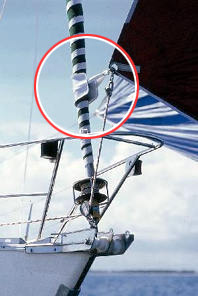
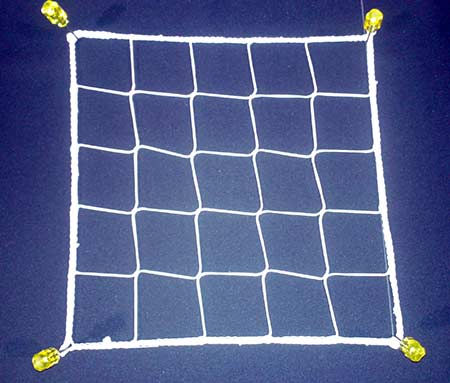
A Belgian Jib is a spinnaker net: a 100mm-mesh panel rigged in the upper foretriangle that closes the gap between the headstay and the rest of the rig so a running spinnaker physically cannot wrap itself around the headstay. Sailors call it a "spinnaker net" or a "spinnaker wrap net"; the brand name in the ATN catalog is "Belgian Jib" thanks to a long-running French friendly ribbing of the Belgians. In French it is called the "Foc Belge". On a deep run in swells in light air the rolling motion changes the apparent wind as the masthead swings from side to side. In these conditions the partially deflated spinnaker will tend to wrap around the headstay. These conditions were precisely what caused its origination in the 1960s Transpac races.
When to use the Belgian Jib
The Belgian Jib is a must-have for long running ocean legs and any short-handed downwind passages. It is widely used in the Transpac and increasing in popularity in the short-handed Class 40. Any short-handed sailor going down wind in rolling seas and light air will benefit from the Belgian Jib preventing the spinnaker from getting stuck. You certainly don't want to go up on the Bosun chair to unwrap your spinnaker if it can be avoided (but if you do need to, check out the ATN MastClimber).
How it rigs
The Belgian Jib mounts at three points: it is hoisted with a spare halyard all the way up the foretriangle, its tack is attached to the roller furler with a sail tie and a downhaul tied off to a deck cleat at the bow, and its clew is lashed on to the mast. You want to set the bottom edge at 6 ft to 7 ft so you can walk under it. If you know you are approaching conditions in which you should use it, set it before hoisting the spinnaker; with its very low windage it is easy to set after the spinnaker is already up if needed.
Pip Hare, writing in Yachting World, describes the same rigging method that ATN supplies in finished form: "make a Belgian jib. This works very well if you have a babystay. Take the jib halyard and wrap it from the forestay around the babystay and back a couple of times, making a net so the spinnaker cannot pass through." Sailors have been improvising this on offshore boats for decades. The ATN Belgian Jib is the production-grade version of the same idea: a purpose-built 100mm-mesh net sized to the foretriangle, with the lacing pattern done once at the factory rather than improvised on the foredeck in 20 knots.
Pair it with the ATN Spinnaker Sleeve and the ATN Tacker and you have a full asymmetric-handling kit: the Sleeve douses the kite, the Tacker controls the tack of an asymmetric during a gybe, and the Belgian Jib stops the wrap when the kite collapses on the run.
Frequently asked questions
Does the Belgian Jib install on a furling headstay, or only on hank-on rigs?
Will it fit my J/105, Class 40, or other one-design class?
When do I deploy it? Can I get it up after the wind builds past 20 knots?
How does it pack and stow?
What the press and owners say
Press
“The other method is to make a Belgian jib. This works very well if you have a babystay. Take the jib halyard and wrap it from the forestay around the babystay and back a couple of times, making a net so the spinnaker cannot pass through. If you do not have a babystay, but do have a second jib or spinnaker halyard, then try taking this down to the toerail on the leeward side and do the same thing.”
Pip Hare, Yachting World, 2015-05-07. Read on Yachting World.
Customer endorsement
“The class 40 boats that have bought Belgian jibs with you are super-happy with them and they have saved many spinnaker wraps!”
Josh Hall, twice Vendee Globe skipper and twice BOC skipper, customer letter, 2024-01-28.
See all ATN owner testimonials across the product line.
Any destination
J/105, Class 40, on request
Pinellas Park, Florida